

Glasses and contacts have long been the standard fix for blurry vision, but laser vision correction has changed what’s possible for many patients. LASIK is the most well-known procedure in that category, and for good reason. But for patients who want the most precise outcome available, there’s a step beyond standard LASIK.
At the Omaha and Lincoln Eye and Laser Institute, that option is iLASIK, a fully customized, all-laser procedure that uses two specialized technologies to deliver results that traditional LASIK alone cannot match. Keep reading to learn how iLASIK works, what makes it different from standard LASIK, and whether it might be the right procedure for you.
How is iLASIK Different from Traditional LASIK?

iLASIK is an all-laser, bladeless vision correction procedure that combines two advanced technologies: the Abbott Medical Optics iDesign system and the Intralase iFS laser. Together, these systems create a procedure that is both highly precise and deeply personalized to each patient’s individual vision profile. Because both components are laser-based, no blades are involved at any point during the procedure.
What sets iLASIK apart from standard LASIK is its ability to detect and correct higher-order aberrations, visual errors that go beyond the common refractive issues that glasses and contacts address. The Omaha and Lincoln Eye and Laser Institute is the first and only vision center in Nebraska to offer both the iFS and iDesign technologies, making it the only practice in the state where iLASIK is available.
How Does iLASIK Work?
The iLASIK procedure follows the same general framework as standard LASIK: a flap is created in the cornea, the underlying tissue is reshaped to correct vision, and the flap is repositioned to heal naturally. What differs is the technology used at each stage.
Creating the Corneal Flap with the Intralase iFS Laser
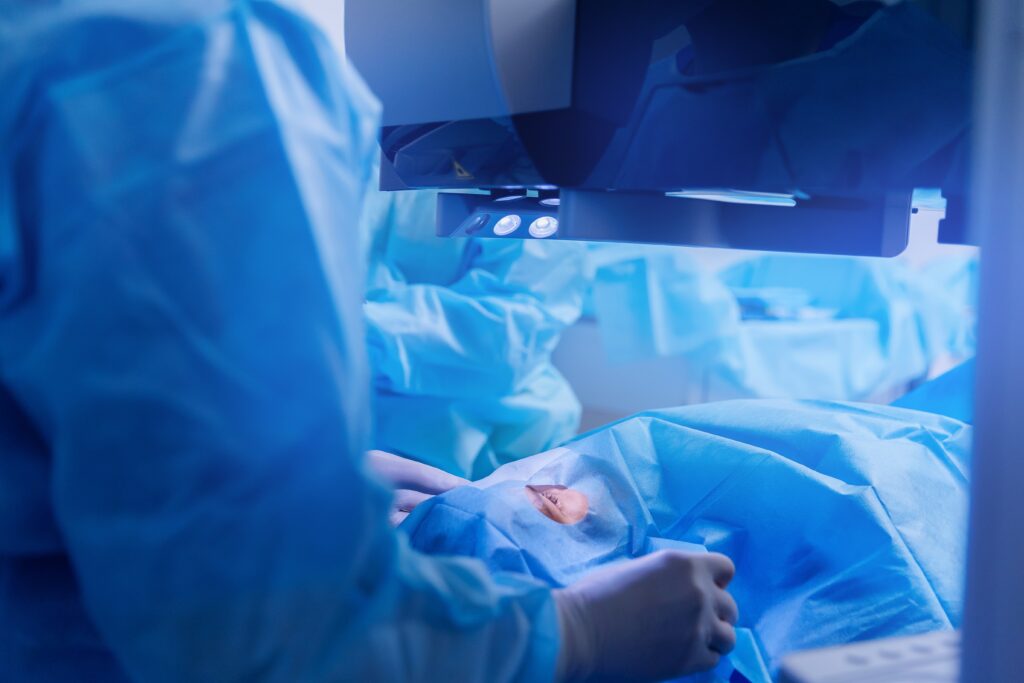
In standard LASIK, a small handheld blade called a microkeratome is used to create the corneal flap. iLASIK replaces this step entirely with the Intralase iFS femtosecond laser, which uses rapid pulses of light to separate corneal tissue at a precise, pre-programmed depth. This bladeless approach allows for a more consistent flap thickness and reduces the variability that can come with a manual blade. The result is a flap that fits more uniformly and heals more predictably.
Reshaping the Cornea with iDesign-Guided Technology
Once the flap is created and gently folded back, the iDesign system takes over for the reshaping phase. Before the procedure, the iDesign system maps the surface of your eye in detail, capturing more than 1,200 data points to build a comprehensive picture of how your eye processes light. This map is then used to guide our Abbott Medical Optics CustomVue excimer laser as it reshapes the corneal tissue.
Because the iDesign system collects such detailed information, it can account for the unique irregularities in your eye that a standard prescription does not capture. The laser follows this personalized map throughout the procedure, correcting your vision with a level of specificity that a general prescription cannot replicate.
What Are Higher-Order Aberrations?
Most people are familiar with common refractive errors like nearsightedness, farsightedness, and astigmatism. These are lower-order aberrations, meaning they cause relatively straightforward visual problems that glasses, contacts, and even standard laser procedures can address.
Higher-order aberrations are subtle visual distortions that affect the quality of your vision and are not corrected by a standard prescription. They include issues like glare, halos around lights, reduced contrast sensitivity, and difficulty seeing clearly in low light. These distortions are caused by irregularities in the shape of your cornea or the way your eye bends light, and they vary from person to person.
Standard LASIK and wavefront-optimized laser procedures are not designed to correct higher-order aberrations. Because the iDesign system maps your eye in such fine detail, iLASIK can target and correct these aberrations during the reshaping phase, giving many patients sharper, cleaner vision than would be possible with traditional approaches.
Am I a Candidate for iLASIK?
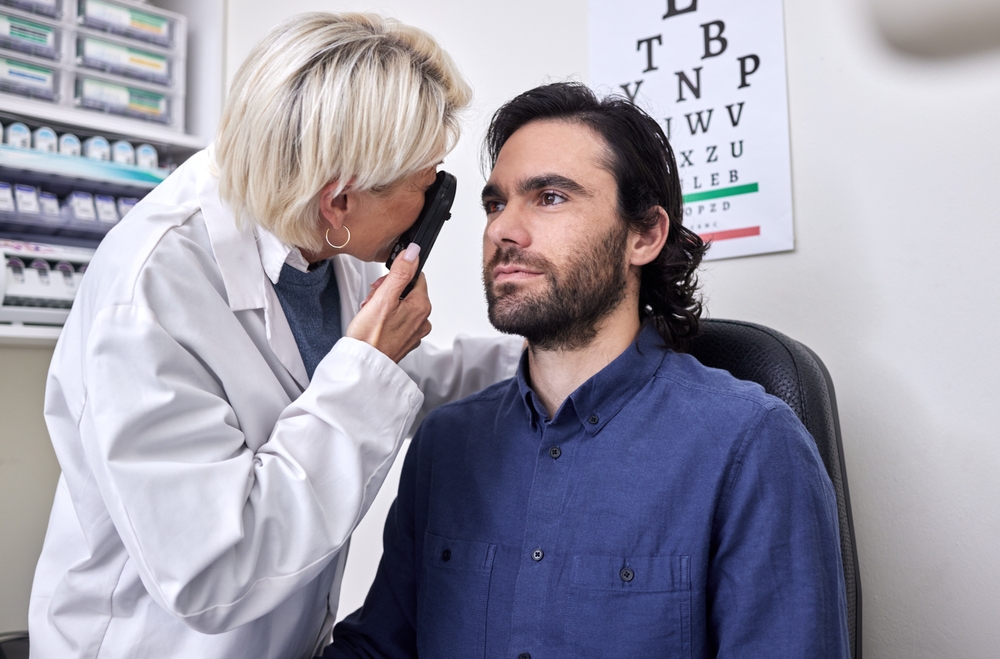
iLASIK candidacy follows the same general criteria as standard LASIK. Good candidates are typically at least 18 years old, have had a stable prescription for at least one year, and are not pregnant or nursing.
Candidates should also have corneas thick enough to support flap creation and not have active eye conditions such as glaucoma, cataracts, or severe dry eye. Certain systemic health conditions, including autoimmune disorders, may also affect eligibility.
Because iLASIK is a fully customized procedure, it can be appropriate for a wider range of patients than standard LASIK, including those with higher-order aberrations that would otherwise limit their potential outcome. A comprehensive consultation at the Omaha and Lincoln Eye and Laser Institute is the only way to know whether iLASIK is right for your eyes.
If you’re not a candidate for iLASIK, your eye doctor can discuss other options, including EVO ICL, PRK, or refractive lens exchange, which have different eligibility criteria.
Clear Vision Starts Here
iLASIK offers patients in Nebraska access to one of the most precise and personalized forms of laser vision correction available today. By combining bladeless flap creation with a fully customized, iDesign-guided treatment, the procedure addresses a broader range of visual errors and delivers results that standard LASIK cannot achieve for every patient.
If you’re ready to find out whether iLASIK is the right procedure for your eyes, schedule a free consultation at the Omaha and Lincoln Eye and Laser Institute in Omaha or Lincoln, NE, today.